
THANKS FOR VISITING OUR BLOG! PLEASE CLICK HERE TO SEE OUR QUICKER LOADING BLOG THAT'S IN BETA STAGE!
ALSO WATCH FOR OUR CONTESTS FOR GREAT PRIZES COMING IN 2009!
At the recent Society For Information Displays (SID) show , Sony releases big news in expanding their OLED product line. With the creation of Sony's XEL-1 OLED television, the market was waiting with much anticipation what was next in the OLED expansion.
The OLED race to be king has confirming aproximately a $ 200 million investment to increase its lead in manufacturing mid to large size OLED televisions. Yoshito Shiraishi, general manager of E-Products and Business Development Department, TV Business Group, Sony Corp, delivered his keynote speech "Sony's challenge is to be the first one out with OLED televisions". Wherein he discussed the history & the future of Sonys development of OLED related technology development
According to Mr. Shiraishi, Sony had developed a newer prototype version of OLED TV every 3 months when creating the XEL-1. Sonys committment to being the top in the latest televison and display tech is not a new thing of course.
copyright oledevices - 2008 - all rights reserved
Monday, May 26, 2008
SONY INVESTS MORE $ IN OLED TELEVISION DEVELOPMENT


Wednesday, May 7, 2008
DUPONT ALLIANCE WITH DAINIPPON RESULTS IN HIGHER PERFORMANCE & LOWER COSTS FOR OLED DISPLAY PANELS

THANKS FOR VISITING OUR BLOG! PLEASE CLICK HERE TO SEE OUR QUICKER LOADING BLOG THAT'S IN BETA STAGE!
ALSO WATCH FOR OUR CONTESTS FOR GREAT PRIZES COMING IN 2009!
OLED technology takes another step forward with the recent alliance between Dupont and Japan's DaiNippon Screen Mfg. in developing manufacturing equipment for printed organic light emitting diode (OLED) . Not only will they make the equipment together, they have an added strategy within the OLED sector to develop the required materials, technology and the necessary production equipment.
Dupont is introducing its small molecule based OLED solution materials plus its proprietory processing technology while DaiNippon screen has developed a nozzle printing technology print OLED materials at high speeds.
This would be in-line with their joint upcoming mass-production of OLED panels, screens, displays, and the like. This joint effort will result in higher performance, lower costs eventual breakthroughs in future OLED display technology.
SUMITOMO CHEMICAL PLANS TO CREATE LARGE OLED PANELS BY 2010
One of Japan's largest chemical companies announced Friday that it will start to produce OLED panels over 40 inches in size by 2010.
The companies president, Hiromasa Yonekura, announced Sumitomo will use a new proprietory technology similar to ink jet printing to manufacture the large profile OLED displays. This means that the smaller screens presently associated with organic display technology has been overcome, along with the associated lower production costs and fewer production prodblems when creating large footprint OLED screens.
Their production for smaller to mid-size OLED panels will commence in 2009 with larger 40" + coming in 2010. Sumitomo is in negotiations presently to supply major television manufacturers with larger OLED displays however to date no information regarding the companies have been released.
copyright oledevices - 2008 - all rights reserved
Tuesday, April 8, 2008
OSRAM & INGO MAURER PREMIERES "EARLY FUTURE". OLED LIGHTING AS FUNCTIONAL ART!

Osram Opto Semi-Conductors and world re-known artist and lighting designer Ingo Maurer have teamed up together to create the world's first, limited edition OLED (Organic Light-Emitting Diode) functional organic table light dubbed as "Early Future".
To create these one of a kind, efficient, eye-catching, innovative OLED lamps, Ingo used 10 WOLED (White OLED) ultra-thin tiles ( 132mm x 33mm) supplied by Osram. Maurer probably most well known for his exhibit in 1966 of "BULB" shown in the New York Museum of Modern Art since 1969. Not too mention along with other works he has designed who has received a multitide of awards over the years for his functional yet abstract designer lighting creations.
Organic LED's are manufactured as high energy efficient, low operating voltage plus enviro friendly with mercury-free design. OLED lights are not a collection of a single light source as an incandescent bulb but a uniform light generating surface area that is razor-thin and super-lightweight, with a pleasing light making them an excellent lighting choice for commercial and residential use.
Osram has a team of 50 engineers working on the development of furthering OLED lighting technology. The amazing properties of OLED light means that the future will soon bring flexible and transparent organic light to the market quite soon. Transparent OLED lighting means that by adding OLED panels over a regular glass or even an automotive window, during the day natural light will shine through however at night the window will transform into a self-illuminating window casting a very pleasing light to any room, according to Dr. Bernhard Stapp, Head of Solid State Lighting at OSRAM Opto Semiconductors.
The proto-type of " Early Future" will be showcased at this months Frankfurt Light & Building Fair .
copyright - oledevices- 2008 - all rights reserved
Thursday, March 20, 2008
EFFICIENCY OF OLED DISPLAYS BRIGHTENS UP INDUSTRY

THANKS FOR VISITING OUR BLOG! PLEASE CLICK HERE TO SEE OUR QUICKER LOADING BLOG THAT'S IN BETA STAGE!
ALSO WATCH FOR OUR CONTESTS FOR GREAT PRIZES COMING IN 2009!
Friday, March 14, 2008
GE TO BRING ORGANIC LIGHT TO LIFE

General Electric Global Research of Niskayuna, New York, the central research division of GE, an obvious giant among industry, has announced a major milestone to "go green" with the expansion of their OLED Lighting production facilities. They have proceeded to advance within the ever fascinating OLED business by introducing their plans devised for a new rolled OLED production manufacturing facility. This was a 4 year, $13 million collaboration between GE Global, Energy Conversion Devices Inc. (ECD builds the production machinery and supplies the expertise to create the OLED roll-to-roll process) and the U.S. Commerce Department's National Institute of Standards and Technology (NIST).
GE has a process that will eventually create organic panels that will be punched out kind of like a cookie cutter in comparison, for use within all types of products of all shapes, sizes, styles including many other varieties of OLED, like FOLED (Flexible Organic Light-Emitting Diode) and AMOLED) Active Matrix Light-Emitting Diode) for example. The process can be likened to a newspaper web press offset printing method where huge rolls of paper-thin organic sheets can be imprinted with the organic compounds for use then within all types of products of an entirely new genre. OLED lighting sheets will be created for applications from residential and commercial lighting to possibly someday for use in space.
At present GE is in the research stages by demonstrating their approach to how the OLED lights will operate but mass production is around two years away in the industry's estimations. With this roll-to-roll process GE's OLED light production ultimate goal is designed to eventually replace traditional light bulbs and flourescent tubes by creating OLED light sheets that are ultra-thin, lightweight, organic in nature, with the ability to save energy and produce a naturally appealing light for humans.
Sounds like a winner to me, where do we get them?? Sorry but it won't be for another 2+ years minimum at least and then some until GE's facility is up and into mass production for retail worldwide.
General Electric doesn't go BIG unless they know exactly what's coming, since they are one of the big conglomerates that created the trends plus not too mention the fact that they created the lightbulb...... GE was formed in 1892 with a merger of Edison Electric Light Co. and Thomson-Houston Electric Co), so today it only makes sense they have committed to take this cool new OLED technology and start to produce super energy efficient, eco lights that will one day become as common an item in our daily lives just as the incandescent lightbulb once was o'so long ago.
Edison's main specialty was and under GE today, it still is LIGHT. This means if GE's involved in OLED technology, a long line of others are right behind them ready to grab a piece of the OLED pie. Those corporations, investors, inventors, speculators, and the like who are switched on enough ........ (get it ?) will be lining up to supply this new fangled organic lighting to the world. That spells a boatload of business and profits for all of those that take heed. But anyway you look at it, OLED in ALL forms is GOLED (Gold, get it? I'm on tonite folks) !!
copyright oledevices 2008 - all rights reserved
Tuesday, February 19, 2008
SONY TO SPEND $200 MILLION ON OLED DISPLAY PRODUCTION
 SONY OLED "DREAM DISPLAYS"
THANKS FOR VISITING OUR BLOG! PLEASE CLICK HERE TO SEE OUR QUICKER LOADING BLOG THAT'S IN BETA STAGE!
ALSO WATCH FOR OUR CONTESTS FOR GREAT PRIZES COMING IN 2009!
With the recent increase in LCD sales driven in most part by the upcoming digital tv conversion within the USA, prices are finally at a point where just about any household will own an LCD type of flat panel display (FPD). So with this huge increase in LCD sales plus the lower cost to manufacture LCD displays, there is a void now created within the electronic world that must be filled.
In 2008 this void looks like its being filled by the latest in the OLED (Organic Light-Emitting Diode) or PH-OLED (Phosphorescent-Organic Light-Emitting Diode) technology, the high end, all singing, all dancing, fully optioned, mother of all displays available to man today. A tv made from phosphorescent organic materials, as razorthin as a slice of your favourite deli meat and a screen image as memorable as the first time I laid eyes on a spanking new Sony Trinitron back in the day.
Japanese electronics giant Sony released details today on their plans to ramp up their technology to develop medium to large screen OLED TV's. Starting in mid 2008 this injection of capital will help to expand on further development at Sonys Mobile Display Corporation Plant (SMD), technology relating to the deposition of light-emitting layer sub-strates as well as the manufacturing of low temperature polysilicon transistors (LPTS). With this influx of funds to expand on the facility the end goal being the ability to manufacture larger OLED display panels for use within various commercial and retail sectors.
The major issues with OLED is the limited size of the organic displays along with the present high costs to manufacture them. As a comparison, glass substrates from which organic panels are cut are 600mm x 720mm & 550mm x 650mm. Seventh and eight generation LCD plants use sub-strates up to a whopping 2200mm x 2500mm. So in comparison with Sony's OLED technology today, OLED development is equivalent to approximately a third generation or possibly a 3.5 generation LCD plant. The projected production date for large screen OLED display at the SMD plant is by early 2010.
One other advantage of OLED panels (other than the many obvious ones) is the lower manufacturing process costs of OLED compared to LCD. Since OLED tech is emissive, meaning when the organic molecules phosphorize to emit photons equaling light the electroluminescense is relying on the organic molecules to generate white light called WOLED. By tailoring the compositions of the organic materials it is also possible to create devices that emit coloured light as well.
OLED is created by applying the phosphorescent materials onto glass or plastic / polymer sub-strates which allow for their unbelievable ultra-thin displays. There are many ways PHOLED can be manufactured: organic vapour phase deposition, ink-jet printing, laser-induced thermal imaging, spin coating, and organic vapour jet printing. For low-cost manufacturing of high-efficancy PHOLED's the choice of fabrication method depends on operational costs, length of processing time, reproductability of device performance, and the organic material's compatibility with the particular process. PHOLEDs may one day be manufactured using roll-to-roll processes similar to those used to create magazines and books.
In comparison with the back-lit technolgy utlized within LCD, the manufacturing costs of OLED will be much less per unit, making OLED a much better FPD (Flat Panel Display) choice in the long run. As with any new technology with such major backers which is so cutting edge, to successfully become integrated into society en masse as LCD and plasma has for a number of years, is a long term committment by these corporations. The recent drop in LCD TV and LCD monitors has given the electronics industry another major boost. Plus with the upcoming USA 2009 conversion to all digital TV signal means more FPD's will be sold within the USA, so it opens the door for OLED TV and all the other OLED related product's to take center stage in the ever expanding, hugely exciting organic electronics industry today.
Due to the past difficulties in the blue spectrum and the problems associated with larger organic display's, once issues such as these are properly addressed and dealt with in research, like these types of corporations can do, then OLED should reach 40" by mid 2009 - 2010 quite easily with the advancements of continuous research. It seems each day a new OLED related news release is made on any web news feed, so this is certainly a good indicator of the continued growth of the market. For the record 2007 - early 2008 has shown to be a time when a large number of the technical barriers within some of these concerns have been rectified or at least dramatically improved upon from say 1 year ago even.
There is a huge array of major corporations such as Samsung SDI, Toshiba, Sony, Hitachi, Canon, Toyota Ind., Matsushita / Panasonic, Universal, Display, the list goes on, on and who are involved in niches of OLED such as; FOLED - Flexible OLED, AMOLED - Active Matrix OLED, Passive Matrix OLED, WOLED - White OLED, PHOLED - Phosphourescent OLED. As far as the concerns over the high retail price of OLED in the stores when the numbers are calculated they show that the tooling costs for the OLED plants to gear up to manufacture OLED displays will be gained back much quicker in comparison to LCD due to the very nature of how organics are be created. Much less equipment, parts, labour, lower all around processing costs when compared to LCD means that even though OLED is much better technology, it doesn't mean that it has to cost more to be superior.
Samsung SDI has also announced it is engaging in expansion plans for the ramping up of their second phase in AM-OLED (active matrix OLED) production, many are referring to as " dream displays" within the industry. This move is intended to double production from the current 1.5 million to 3 million by cutting costs, wherever that may be is unsure at the moment however. SDI has invested 480 billion Won in its Cheonan, South Chungcheong Province plant saying production would double monthly output last October.
With Sony, Samsung SDI, Toshiba, Matsushita, Toyota Industries, Universal Display, Foled, Canon, and many more major players that have shaped the world of electronics now involved in the mass production of OLED display technology, the future looks razorthin, super sharp and bio friendly folks!

Sunday, February 3, 2008
FPD EXPO JUNE 2008 - KOREA FLAT PANEL DISPLAY EXPOSITION
 ZYGO's Flat Panel Metrology (FPM) Systems
 An early head's up on what's upcoming for 2008.
The June exposition which will be full of advanced FPD (Flat Panel Displays) tech companies showcasing their OLED, LCD, plasma, PDP, Lazer, computer, electronics, nanotechnologies and the like, displaying the latest in FPD related technologies. Major players like Canon, Sony, Toshiba, Pansasonic, Universal Display, Seiko, Epson, Hitachi, Matsushita, Samsung.....the list goes on, will be highlighting many of their latest products utilizng FPD applications.
A large array of less prominent but none the less quite successful, are companies that are creating products relating to the FPD industry is a huge part of this trade shows appeal. These companies create the parts, test equipment, research, software development, hardware manufacturers, support systems, tech support, etc, etc. which support the big manufacturers in the industry for the creation of the final end products we crave. Many of these companies are glossed over as far as their importance within the long chain of development however without the groundbreaking products created by such firms today's state of the art products could not be developed for our use and ultimate pleasure.
oledevices.com - copyright 2008 - all rights reserved
Monday, January 28, 2008
OLED DISPLAY LIFESPAN DOUBLES!

ALSO WATCH FOR OUR CONTESTS FOR GREAT PRIZES COMING IN 2009!
The concerns over the degradation and life expectancy of OLED TV displays seems to be a fleeting one now that Toshiba along with Matsushita Display Technology are developing a new OLED prototype display panel that effectively doubles their life expectancy.... from the current 20,000 - 30,000 hours ( that's about 8 hrs per day use for 10 years) as an average to over 50,000 hours.
According to recent reports the development of a 20.8" protype OLED display is designed with a metal membrane that assists in light transfer from the polymers within the substrate through the glass surface much more efficiently than current OLED standards. This will mean that the OLED displays natural brightness can be cut in half while maintaining the picture quality and effectively doubling the units lifespan.
With this huge step of increasing the lifespan of OLED TV displays, it looks like a major hurdle has been overcome in the development process of OLED display technology. This could possibly lead to larger screen OLED TV's being available for retail sooner than predicted. As with LCD and Plasma TV OLED TV will eventually become an everyday product as time and product development allows.

oledevices.com - copyright 2008- all rights reserved
Wednesday, January 23, 2008
WORLD'S THINNEST NOTEBOOK! APPLE'S MACBOOK AIR

THANKS FOR VISITING OUR BLOG! PLEASE CLICK HERE TO SEE OUR QUICKER LOADING BLOG THAT'S IN BETA STAGE!
ALSO WATCH FOR OUR CONTESTS FOR GREAT PRIZES COMING IN 2009!
Be Sure You Check Out the Other News Releases for the Apple MacBook Air on Our Blog as Well.
MacBook Air Features
The Air does not come however with a built-in dvd or cd optical drive player but it has the ability through Remote Disc the Air is able to locate drives on other computers within its range to grab the information from a dvd or cd.

Wednesday, January 9, 2008
CES 2008 - HDTV's - SuperThin Is In !

THANKS FOR VISITING OUR BLOG! PLEASE CLICK HERE TO SEE OUR QUICKER LOADING BLOG THAT'S IN BETA STAGE!
ALSO WATCH FOR OUR CONTESTS FOR GREAT PRIZES COMING IN 2009!
Panasonic
Panasonic rocked the house when they unveiled their mind blowing 150-inch plasma television they say will be shipping by years end. This behemoth, said to be the world's largest plasma tv, sports : 4k x 8K" resolution ( about 8 megapixels). Panasonic was proud to state that 9 50 inch panels could replace it.
Hitachi
Hitachi Ltd. showed off their newest LCD prototype display that is twice as thick as the Pioneer plasma model, a 50" PDP TV at a super slim 1.5 inches, whcih is the name of this particular model with three sizes of 1.5" lcd tv's - 32", 37", 40".
Sony
Sony debuted their 27" OLED TV with 1080p res and predictions are looking at 2009 for this one. The XEL-1 is now shipping into North America for around $2,500 but that will eventually come down as time and larger screens are produced.
copyright 2008 - oledevices.com - all rights reserved
Thursday, January 3, 2008
Apple Patents OLED Customizable Computer Keyboard
 Optimus OLED Keyboard
 THANKS FOR VISITING OUR BLOG! PLEASE CLICK HERE TO SEE OUR QUICKER LOADING BLOG THAT'S IN BETA STAGE!
ALSO WATCH FOR OUR CONTESTS FOR GREAT PRIZES COMING IN 2009!
Update Feb 08
Apple's creative design teams are always going to surprise us with their innovativations not found in any other products on the planet and their recent patent filing in 2007 for an OLED QWERTY keyboard is starting to get some attention as of late.
With the increasing use of organic light emitting diodes - OLED - in devices today, Apple has proceeded to patent a dynamically controlled keyboard utilizing organic technology. It will be able to be mass produced since some of the standard components from traditional keyboards can be used in the OLED models. This means costs can be lower and made available simply enough for mass production if they proceed in that direction. This type of keyboard design would lend itself very well to media work, since applications like Adobe Photo Shop, FinalCut, Logic and more would be simplified due to the keys would each display more data on the keys...... or should we say touchpads?
OLED technology used for keyboard design, will ultimately lead to future styles that could easily incorporate a few added features such as; finger print recognition, video capability with AMOLED ( Active Matrix OLED )screens embedded into the keyboard plus stylized units using shaped FOLED ( flexible OLED) to vary the keyboard designs.
What are Oled's?
Apple's First iOLED Gadget in the Works
Patents can take a number of years to come to fruition if at all but as they make very clear....Apple embraces technology and they are superior in getting products to market....and fast! So it looks like 2009 -2010 and beyond will present some very interesting OLED inventions.
Apple OLED KeyBoard Article:
Art Lebdev Link:

Saturday, December 22, 2007
Future Organic Display Technology Here Today
 Samsung OLED TV Prototype
THANKS FOR VISITING OUR BLOG! PLEASE CLICK HERE TO SEE OUR QUICKER LOADING BLOG THAT'S IN BETA STAGE!
ALSO WATCH FOR OUR CONTESTS FOR GREAT PRIZES COMING IN 2009!
In an industry that goes gaga over flat display technology such as LCD and plasma, OLED is set to create unparalleled excitement within the next few years. Still in its infancy the latest organic display technology promises to provide us with OLED offering better energy efficiency, razor thin 3mm - 4.3mm thick TV displays, ultra fine angle viewing, with intensely vivid colours, super high contrast ratio (up to 1 million:1 in certain displays) plus it can be used as high intensity light emission for any superior lighting needs. Refresh rates are an issue compared to crt and lcd however at present any organic displays are comparabily slower.
One significant advantage that OLED has over LCD is the lower cost of manufacturing since the displays do not require backlighting to function like a liquid crystal or plasma screen does since the organics are stimulated to phosphorize. However, OLED technology isn't without its drawbacks, in particular panel longevity. The organic compounds degrade with use, especially those that emit blue light, so they won't operate at full brightness for anywhere near as long as an LCD will. The addition of phosphorescent materials do improve OLED longevity, but still not up to LCD levels.
The bottomline - wherever there is a need for utilizing some form of OLED it will certainly gain a lot of respect and have a major influence on the industry as time unfolds.
Current and Expected Usage
As of now the applications of OLED's are largely restricted within a few, small consumer devices such as mobile smartphone displays, MP3 and MP4 players, portable movie and music players, watches as well in some digital cameras. Major manufacturers of OLED TV's like Sony's recent XEL-1 release, Samsung's upcoming 31" OLED TV in 2008, Matsushita, Canon and Hitachi's alliance in AMOLED is heading for some awesome new products. Their interest is to target the smaller display markets which is a gigantic industry in itself.
Along with a growing number of other companies who are developing products this is an obvious indicator of the trend to bio type devices. Gearing up their facilities to start manufacturing OLED products for the North American and European markets.
It looks like OLED is destined to become the newest trend in home entertainment and work centers very soon, on its way to become the most superior high def display technology in history, eventually leading the way over LCD and plasma.
Once this technology is integrated within the normal consumer retail channels, it is expected to become a huge major growth sector with a continued demand many different applications in the organic screen marketplace. This would include as an example, highly efficient household and commercial lighting that are bio friendly which has no ill effects on humans, animals or our environment. The future is now for ultra-thin flat panel super high def televisions, organic razor thin computer monitors, high power portable and flexible display's with wi-fi capabilities that can accept data then displayed to the user.
This one device would be similar to the electronic newspaper display reader in the Tom Cruise movie " Minority Report ". Similar to the electronic billboards and the subway rider's handheld, paper thin, wifi e-newspaper. Incorporating flexible and stiff AMOLED and/or FOLED for example into varied types of smartphones, pc and tv displays, laptops that would be ultra-thin with more power, portable devices and with OLED light becoming the highest quality replacement to the ubiquitous and dated white incandescent light bulb.
In sub-verticals such as automotives, aviation, military, medical, entertainment, commercial, industrial, scientific, etc, etc, OLED will now be used in a host of ways in many other industries where such tech was not expected to make a mark at any time soon.
However not one to be left behind LCD especially and plasma to follow LCD is still currently the major leader and will hold its share of the massive electronic display market until OLED production costs drop to competitive levels to compete with LCD and plasma technology. Already LCD and plasma costs are dropping very fast into retailers across North America in the making of the next generation of OLED.
The Future is Now
The future of organic electronic products has arrived with continual steady growth for years to come once the major manufacturers are tooled up for mass production of whatever they decide to create on their drawingboards. Due to the efficiency of OLED's battery power that once was used by devices to power the bigger lcd screens for example, will be saved and used on power aspects for other requirements / parts of the device. This will no doubt lead to much more extremely powerful digital / bio smart products with many new applications yet to be seen.
Thursday, December 13, 2007
NEW AGE OLED LIGHTING
 Blue FOLED - The Hardest Colour To Create
THANKS FOR VISITING OUR BLOG! PLEASE CLICK HERE TO SEE OUR QUICKER LOADING BLOG THAT'S IN BETA STAGE!
ALSO WATCH FOR OUR CONTESTS FOR GREAT PRIZES COMING IN 2009!
OLED lighting technology is touted as the ‘next big thing’ for an industry in need of some major expansion with state of the art science.
It looks like OLED or organic light emitting diode and its meriad of uses is coming to a store near you and in a big way! The future of electronics is steamrolling into a new organic electronic age with the increasing development in organic displays and devices that incorporate these displays.
It is a state of the art technological advancement utilizing organic technology which is contributing to a major leap in our civilizations progression in harnessing biotech in a non-destructive way for our comfort and needs.
When compared to the current LCD and Plasma mechanisms, OLED promises to bring a host of additional advantages. Today the future of electronic display tech is looking much brighter, with a host of superior features such as bio friendly, super high contrast, ultra vibrant colours, wide viewing angle, razorthin organic display, ease and ultimately a lower cost of manufacturing compared to LCD and Plasma displays, lower energy consumption on small displays presently, no harmful radiation, space saving, flexible where required, lightweight and much more.
How Does OLED Work ?
The concept behind an OLED is very simple in their basic design. OLED's are similar to electroluminescent lighting, where a sheet or material is excited so it then emits the light. OLED light sources are a thin flexible sheet that is made of 3 layers. The layer of emissive electroluminescence is punctuated by organic compounds. The polymer or sublimed molecular film is sandwiched between two electrodes, one is transparent.
Material present on this organic luminescence diode allows the deposition of organic compounds onto the polymer substrate when the current passes thru them. Standard inkjet printers can be used to lay the material onto the substrate which means a huge potential for mass manufacturing at lower costs than LCD.
It is essentially a matrix of organic compounds arranged in pixelated form. The layers then emit varied colours of light when electricity passes through each layer. The electrons then are pushed through the layer depending upon which light gets emitted. Most commonly used in TV displays as well as smart phones the OLED promises to make lighting easy on the eye for daily use while providing superior image quality and effects within varied industry's. Applications are used within smartphones, pmp's, pvp's, mp players, small tv displays, monitors, lights, etc ( until Samsung's 2008 CES premiere of their 31 inch and 40 inch OLED TV ) for example.
High Light Output -
One of the tremendous advantages of OLED is the ability to emit intense amounts of light without hurting readability even under direct sunlight. While it was earlier generally perceived that of all the combined electrons called "excitons" could only emit 25% of light however with modern research and the advent of developing new technology's it has allowed for 100% of these excitons to convert into visible light. This makes OLED technology provide a much higher light output with many added advantages compared to traditional lighting in use today.
This is one main reason why this lighting technology is being used for ultrathin oled displays which are as thin as 3mm-4.3mm but are highly effective for light and display applications. For the newer slick variety of smartphones such as the models from Motorola, Nokia and Samsung, the superthin OLED displays are now being exploited within their product lines to their maximum advantage looking toward an increasing and continual growth pattern within many manufacturer's product arsenals.
At the present state of development since OLED's tend to consume a significant use of power and create high heat a lower life of the light source as compared to other lighting technology like LCDs, this technology is preferred for mobile phones until such time allows for better tech designed for other products to work efficiently. The enegry efficiency is very high compared to LCD for example however the total life hours for AMOLED at present is around 35,000 hours compared to LCD at 50,000 hours. This will of course increase once developers find the proper way to increase the organic displays life expectancy.
The Future Is OLED Bright -
Today most cell phones do not have ultrathin oled displays, however as of late Samsung is planning to launch OLED technology via its brand new QVGA resolution AMOLED display. This is seen as a breakthrough in mobile phone technology
Oled TV technology is still fairly new however companies such as Sony, Samsung, Hitachi, Matsushita, are already paving the way and with Sony's recent introduction of their late 2007 release of the Sony XEL-1 11" TV, the electronics industry is on the verge of a new era in organics.
Samsung's latest news of their upcoming premiere of their 40" proto-type OLED TV at the Las Vegas Electronics show CES, is upcoming January 2008. It also looks like they will be releasing a 31" OLED TV for retail sales sometime in 2008 within North America which will be a huge step for OLED.
As of this writing Toshiba has however delayed their debut OLED TV until in 2009 siting issues regarding higher than required power consumption necessary for optimum operating efficiency on larger displays but within the next year they may be up to speed on that issue.
copyright 2007-2008- oledomains - all rights reserved

Wednesday, December 12, 2007
Samsung SDI to ShowCase 40" OLED TV January at CES 2008
 LARGEST SAMSUNG 31" OLED TV FOR CONSUMER SALES
THANKS FOR VISITING OUR BLOG! PLEASE CLICK HERE TO SEE OUR QUICKER LOADING BLOG THAT'S IN BETA STAGE!
ALSO WATCH FOR OUR CONTESTS FOR GREAT PRIZES COMING IN 2009!
It does however look like Samsung may initially premiere the release for sale to consumers within North America the 31" OLED TV and not the 40" OLED TV prototype which they may also showcase at CES. Retail sales will commence sometime in 2008 which will certainly lead the way for others to follow close behind introducing their latest OLED technology.
Samsung isn't about to quit the slim display race quite yet with their latest effort in the organic display race resulting in a 31" AMOLED TV. This premiere of their newest display is the largest OLED type of TV ever conceived to date and measuring only a razor thin 4.3mm. Placed side by side with your LCD TV the OLED version will make it look like it needs a crash diet. Not only is it much slimmer it also has a superior contrast ratio compared to standard flat panel screens of one million to one for smaller displays and that's while using only just half of the power of a 32" LCD TV!
This new 31" AMOLED TV has a 35,000 hour rating, which means you can run it for 4 years without turning it off before its' imaging capabilities are depleted. This is the longest hour rating for any AMOLED display manufactured to date. LCD's can run around 50,000 hours in comparison. So you can see the potential is there for huge applications after tooling is developed and retail prices lower. Another superior advantage of this technology is that the substrate is imprinted simply via a typical high speed inkjet printer. This feature alone seems to imply that the costs will decrease quite quickly once mass production facilities are created by the major players.
It is an exciting time for a new television technology since LCD and Plasma have been at the forefront of tv and pc displays available for consumers and commercial use for a number of years now.

copyright 2007-2008 oledomains - all rights reserved
Tuesday, December 11, 2007
Is there room for OLED technology in the TV market?

ALSO WATCH FOR OUR CONTESTS FOR GREAT PRIZES COMING IN 2009!
However, this begs the question: Will OLED TV ever be able to match up with LCD and PDP TVs?
"It will be a challenge for OLED to catch up, given the investments that have been put into the other technologies," said Paul Semenza, vice president of displays at iSuppli, speaking at FID 2007 last week. "But there is no doubt about its performance and there is a lot of potential for the display technology, maybe in mobile applications."
With Sony being the first to throw its hat into the OLED TV ring, due to its introduction of the 11-inch set this month in Japan at a price of US$1,800, shipment volumes are expected to be very small, targeting a small niche of well-heeled, tech-savvy consumers. And even at such a high price, Sony indicated that it is taking a loss on the sale of each OLED set, according to Vinita Jakhanwal, principal analyst for mobile displays at iSuppli.
A few more brands are likely to enter the OLED TV market in 2009, including Toshiba and Panasonic. The major motivation for these companies' entrance into the market is to make a statement to the industry that they are capable of producing OLED TVs, Jakhanwal added.
OLED Problems and Benefits -
Semenza stressed that despite the obstacles, iSuppli does not discount the prospects and potential of OLED technology. However, there are a number of fundamental technology and market challenges that must be resolved before OLEDs can make a real impact in the market.
One of these challenges is the fact that active-matrix OLED (AMOLED) panel manufacturing is still an inefficient process, Jakhanwal said. As the size of OLED displays becomes larger, the yields and manufacturing losses also get larger.
"As a result, AMOLED products are going to be small-sized displays, for applications such as mobile phones and personal media players (PMPs) for a few more years," Jakhanwal said. "OLED suppliers still are struggling with improving yield rates and low manufacturing efficiencies for small-sized displays."
Furthermore, OLED material lifetimes are still an issue for products that require long lifetimes such as televisions. Add to this the fact that AMOLED suppliers cannot guarantee high volumes because the technology is coming from a single source.
However, OLED TV has a number of great upsides, including: OLED TVs use no backlights, so they offer potential power-savings benefits compared to other technologies. Because they have no backlights and use only a single glass substrate, OLED TVs can be very thin. The response time for OLED TVs is very fast, so there is no motion blur while watching television. OLED TVs have a much richer color gamut than competing display technologies.
iSuppli forecasts the global OLED TV market will reach 2.8 million units by 2013, managing a compound annual growth rate (CAGR) of 212.3% from just 3,000 units in 2007. In terms of global revenue, OLED TV will hit US$1.4 billion by 2013, increasing at a CAGR of 206.8% from US$2 million in 2007. Potential is everything
Because OLEDs already serve as small panels for mobile handsets, PMPs and other small handheld devices, it is safe to assume OLED TVs could be a natural fit for automotive infotainment, mobile television, kitchen televisions or other consumer electronics devices that want to add small-screen sets.
The main challenge for the OLED TV industry is making large-enough panels that could be sold at reasonable prices in order to compete against the other television technologies.
Still, iSuppli believes that OLED TV is promising in the long term. Reducing power consumption, extending lifetimes, achieving larger sizes and attaining reasonable pricing eventually will help OLED TV to be competitive, but in the meantime, it will find a place in applications that require small sets.
SONY ZX-1

WORLDS THINNEST 9MM LCD TV
iRIVER SPINN WITH AMOLED DISPLAY

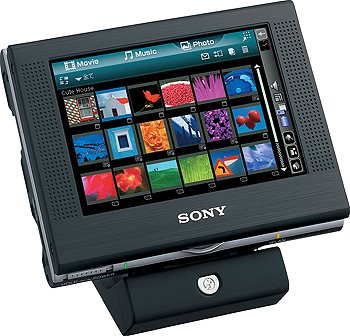
SONY OLED TOUCH DISPLAY PROTOTYPE
FED - SED PROCESS

LATEST SUPERTHIN TOSHIBA PORTEGE R500 LAPTOP

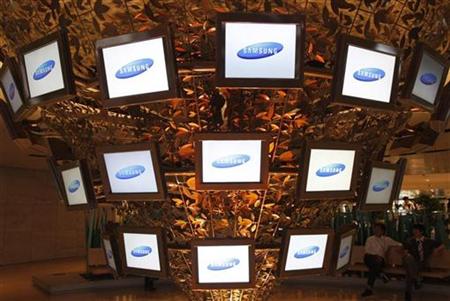
SAMSUNG OLED DISPLAYS
SONY'S AMOLED DISPLAY ELECTRONICS

WOLED " FLYING FUTURE " BY INGO MAUER

WHITE OLED BASIC STRUCTURE

PROTYPE OLED SHUTTERS

SAMSUNG E950

OSRAM LIGHT TILES

BLUE FLEXIBLE OLED LIGHT

IRIVERCLIX GEN2

AMOLED BUTTERFLY CONCEPT PHONES

NOKA N96 OLED PHONE

IPHONE GEN 1


NOKIA DEMOS BENDABLE MORPH CELLPHONE

ORGANIC FLAT PANEL XEL-1 BY SONY

Super Slim, Super Sharp, Super Sony!
SONY XEL-1 FEATURES

OSRAM PROTOYPE OLED LIGHT PANELS

OLED TECHNOLOGY

Phillips Aurea TV


UltraThin OLED

Sony's New OLED TV Release December 2007
NOKIA N58 AMOLED DISPLAY PHONE

OLED TECH

STRUCTURE

KODAK OLED 7.6" PHOTO FRAME

ZX1 SONY BRAVIA

World's Thinnest Wireless LCD TV
NOKIA N85 PHONE / MULTI-MEDIA PLAYER

OLED DEVICES - OLED NEWS BLOG - Click Here To Get FeedBurner Version of OLEDevices.com Content

Ingo Mauer's " FLYING FUTURE"

Protoype WOLED light panel structure suspended in a wire mesh suspended to give an "airy but wave like feel"
TOSHIBA PORTEGE R500

Super Slim Rival To MacAir
LG OLED PROTOTYPE LAPTOP

SONY OLED DISPLAY SHOWS ITS ELECTRONICS

SAMSUNG SDI OLED LAPTOP

Samsung to Introduce OLED Laptop for 2009!
DUPONT AMOLED DISPLAYS EXTREMELY VIVID COLORS

CIRCULAR OLED FLOOR LAMP PROTOTYPE

Morph Phone ProtoType


INTEL TUKWILA PROCESSOR

MILESTONE COMPUTER CHIP PASSES 2 BILLION TRANSISTORS
Ingo Maurer OLED Lamp ProtoTypes

Phosphorescent Emitters

GE BLUE OLED LIGHT

Samsung 31" Prototype OLED TV

Samsung 31" OLED TV


Very Cool Nokia Morph Concept Phone

OLED SHUTTERS


Mitsubishi 60" Laser TV

Powerful, Low Energy AMOLED Lighting


NOKIA N96

Film Legend Robert Redford to Headline at the GSMA’s Mobile World Congress

GSMA BARCELONA 11-14 FEBRUARY 2008
DUPONT PROTOYPE AMOLED DISPLAY

Future of SmartPhones Here Today. Check This Gadget Out!

The Latest in Foldable Phones. Readius by Polymer Vision, Organic Based Folding Display.
Flexible Sony OLED

FOLED
E-PAPER

STAR WARS DARTH VADER Wii

Universal Display

FOLED ProtoType

Diesel OLED Watches

OLED Phone Keys

Samsung OLED 31" TV

Hitachi LCD

Panasonic"s 150" LCD TV

CES 2008 Debuts World's Largest Television

Samsung

NV24HD
Sony XEL-1 Premier Release

Sony XEL-1


Organic Display

Fujitsu E-Paper

FOLED - Flexible OLED Screen

Olevia LCD HDTVs on sale! Save up to $80 instantly!


Samsung SDI Oled
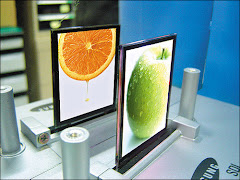
Crisp Images
OLED LIGHT

WOLED
GE OLED

General Electric OLED Samples
Canon PowerShot SX100


Samung Bendable Display

Super Cool OLED Product Applications
FOLED SmartPen Prototype

Roll-Out Flexible OLED Gadgets
OLED Structure

How OLED Displays are Made

OLED - Organic Layer Deposition System

SONY XEL-1 - TV As Art

Snap Shots

SuperCrisp AMOLED

AMOLED E-Reader Concept


ProtoType OLED Laptop

Compenion by Felix Schmidberger
AMOLED Concept Watch

by CoNNext
LG Phillips

AMOLED Prototype Display
Samsung AMOLED

Prototype SmartPhones
OLED Flex Display

16.7 million colors

Sony Unveils World First OLED TV for December 2007

Super-Thin 3mm Display
Sony XEL-1

Razor Thin OLED TV
Butterfly Concept AMOLED Phones

OLED Ribbon

Archimedes Principal in Organic Light
Nokia AMOLED Displays

Samsung E950

OLED Display
Blue Oled

IRiver 8gb OLED Player

Samsung 40" LCD Prototype

Siemens OLED
